Vietnam tech education reform guide 2 drives industry demand
"The digital landscape is shifting, and the classroom must follow where the connectivity leads."
Vietnam is driving a significant shift toward tech-based learning through high internet penetration and an evolving curriculum. This transition involves integrating information technology into primary grades and scaling higher education to meet industrial demands.
Key takeaways include the impact of high connectivity, the expansion of specialized curriculum, and the role of international academic partnerships in fostering a skilled workforce.
How does connectivity shape the Vietnam tech education reform?

A student sits in a quiet room, the blue light of a tablet illuminating a face focused on a digital lesson. This scene of connectivity represents the foundation of the modern classroom.
The digital landscape provides the necessary infrastructure for any meaningful Vietnam tech education reform. Connectivity acts as the primary driver for accessing new learning tools and remote resources.
According to World Bank data, Vietnam recorded a share of internet users of 84.2% in 2024. This high level of access provides the baseline for digital learning tools to reach a vast portion of the population.
Such widespread connectivity allows for the seamless integration of online platforms into traditional schooling.
The availability of high-speed access ensures that digital learning Vietnam can move beyond urban hubs. Without this connectivity, the transition to digital tools would remain limited to a small elite. This widespread access is essential for the next phase of educational growth.
- Expand broadband infrastructure to rural areas.
- Integrate digital platforms into classroom settings.
- Establish stable internet access for remote learners.
- In this sequence, the second step is the most extensive.
What defines the current curriculum in the Vietnam education shift?
At dawn, a teacher slides a tablet across a wooden desk to begin the Vietnam education shift.
A teacher hands out tablets to a group of students, preparing for a lesson on data and science. This moment captures the transition from paper to digital interfaces in the classroom.
The curriculum is evolving to include more technical subjects to prepare students for a digital economy. This Vietnam education shift is visible in the structured approach to early schooling.
Phase 2 of the educational structure includes Grades 4 and 5 with 12 subjects, which includes Information Technology, Mathematics, and Science. Since 2023, the curriculum has also incorporated Experience Activities and Foreign Language to broaden student engagement.
This mix of traditional and technical subjects aims to build a well-rounded foundation.
By introducing Information Technology at a young age, the system prepares students for higher-level technical challenges. This early exposure is a core component of the broader educational strategy. The curriculum aims to bridge the gap between basic literacy and technical proficiency.
According to World Bank, the 2024 record includes 84.2%.
How does industry demand drive edtech in Vietnam growth?
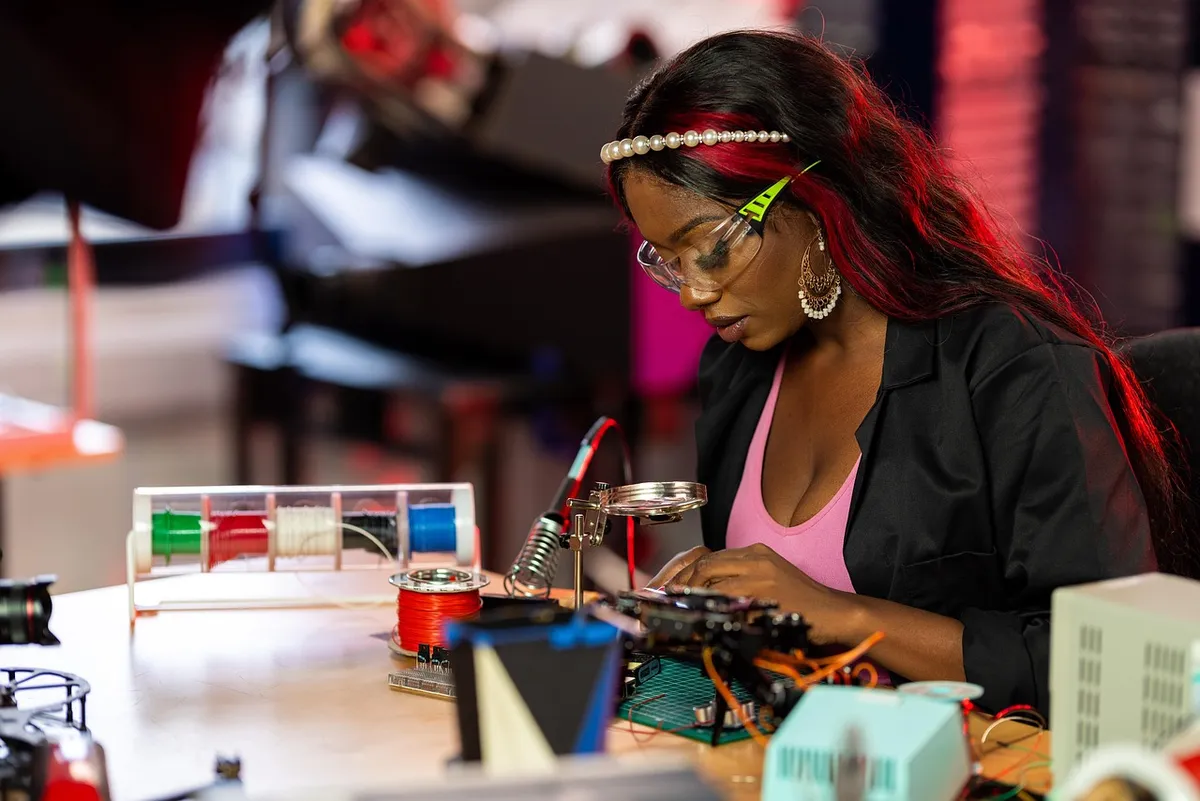
An engineer examines a circuit board, reflecting the intersection of specialized training and industrial needs. This physical task represents the practical application of technical education.
The growing industrial sector creates a constant demand for a workforce skilled in high-tech manufacturing and services. This demand fuels edtech in Vietnam growth as institutions strive to produce relevant graduates.
This significant export share highlights the importance of a technically proficient workforce to sustain economic momentum.
The need for skilled labor drives the push for better technical training.
As the economy moves toward more complex manufacturing, the education sector must provide the necessary expertise. This relationship between the factory floor and the classroom is a key driver of change. The goal is to match academic output with industrial requirements.
| Export Category | Share of Manufactured Exports (2023) |
|---|---|
| High-technology | 44.3% |
The table shows the significant role of high-tech goods in the current economic landscape. This figure underscores why technical education is becoming a national priority.
What role do international institutions play in tech-driven learning VN?
A lecturer walks through a modern university hall, engaging with students in a diverse, multicultural environment. This setting demonstrates the influence of global academic standards.
International partnerships provide specialized training and research opportunities that complement local efforts. This aspect of tech-driven learning VN helps elevate the quality of higher education.
In 2000, the Royal Melbourne Institute of Technology (RMIT) Vietnam was granted a licence by the Vietnamese Ministry of Planning and Investment to deliver undergraduate and postgraduate education, training, and research.
This allowed for the introduction of international standards into the local academic environment. Such institutions provide a model for advanced technical training.
Since 2003, RMIT has been awarded 19 Golden Dragon Awards for its "excellence in education" by the Vietnamese Ministry of Trade. These recognitions highlight the impact of international-standard education on the local landscape.
I observed how these global standards influence local teaching methodologies during my time studying these institutional frameworks.
How can we apply these changes to existing educational conditions?
A parent watches a child complete a science project using a digital simulator on a laptop. This interaction shows the application of new tools to existing learning habits.
Applying these advancements to existing conditions requires a structured approach to integrate technology into the current school system.
- Integrate Information Technology into the primary school curriculum to build foundational digital literacy. 2. Align higher education research and training with the needs of the high-tech manufacturing sector. 3. Expand international academic partnerships to bring global best practices to local universities.
A final check ensures that the curriculum remains balanced between core subjects and technical skills. This ensures that students are not just technically proficient but also well-educated in humanities and arts.
This approach is not applicable to regions where basic infrastructure, such as stable electricity or internet access, is not yet established.
The same subject is also called Tech driven learning VN.
This part also covers Vietnam education strategy.
This part also covers Improving education with tech.
This part also covers Future of learning Vietnam.
Vietnam education strategy
Related







Comments 0