40% Production: How Samsung Transformed Vietnam's Industry
"The Great Supply Chain Pivot"
As global supply chains seek resilience, Vietnam has emerged as a critical manufacturing hub, drawing massive investment from Korean corporations looking to diversify beyond traditional production centers.
* Vietnam offers a compelling blend of favorable operational costs and robust government support, making it an attractive alternative to saturated markets. * The country’s manufacturing sector is structurally dominant, contributing significantly to GDP, reaching 24.5% in 2025. * High Foreign Direct Investment (FDI) inflows, reaching USD 25.35 billion in 2024, underscore international confidence in the investment environment. * The shift is driven by a desire for supply chain diversification and access to a rapidly expanding industrial base, exemplified by major players like Samsung.

Why the Global Manufacturing Landscape is Shifting Away from Traditional Powerhouses?
Steam rises from the heavy steel hull as the cargo ship docks at the port during the gray dawn.
A heavy cargo ship docks at the Port of Hai Phong, its hull heavy with components destined for the global market. The sheer scale of movement in Southeast Asia's coastal hubs signals a massive redistribution of global industrial power.
According to World Bank data, Vietnam recorded manufacturing share of GDP of 24.5% in 2025.
According to the United Nations Industrial Development Organization, China is the manufacturer with the highest output worldwide in 2023, producing 28.7% of the total global manufacturing output.
The global manufacturing hierarchy is undergoing a profound realignment as companies seek to mitigate risk.
In 2023, China remained the manufacturer with the highest output worldwide, producing 28.7% of the total global manufacturing output, followed by the United States of America, Germany, Japan, and India.
This concentration of power in a few traditional hubs has created a vulnerability in global trade. Established giants are under immense pressure to find stable, lower-risk production bases to ensure they aren't caught in geopolitical or local economic shifts.
Vietnam's rise is particularly striking when viewed against its own history. The magnitude of its recent economic transformation is clear when considering that industrial output per capita declined by more than 8% between 1976 and 1980.
The jump from those struggles to becoming a global leader is one of the most significant economic shifts in recent history.

What Economic Advantages Does Vietnam Offer to Foreign Investors?
An investor walks through a high-tech industrial park in Bac Ninh, where the hum of machinery replaces the quiet of the countryside. The sheer density of factories here illustrates a country that has become an industrial powerhouse.
Vietnam has built a structural economic profile that makes it a magnet for heavy industry. The country recorded a manufacturing share of GDP of 24.5% in 2025.
This strength is reflected in the massive capital flowing into the country. In 2024, Vietnam's foreign direct investment (FDI) disbursements reached an all-time high of approximately USD 25.35 billion, reflecting a 9.4% year-on-year increase.
The combination of lower labor costs and the strategic availability of specialized trade zones makes the math work for large-scale operations.
These cost-saving measures, paired with government-backed infrastructure, provide a foundation that traditional markets can no longer match in terms of scalability.
| Feature | Traditional Manufacturing Hubs | Vietnam's Emerging Model |
|---|---|---|
| Labor Cost | Higher, often aging workforce | Competitive, youthful workforce |
| Supply Chain | Saturated/Established | Rapidly expanding/Flexible |
| Growth Potential | Incremental/Stable | High-velocity/Transformative |
How Did Samsung Transform the Local Industrial Base?
A technician in a cleanroom facility in Thai Nguyen carefully inspects a smartphone screen, the light reflecting off the polished surface. This single facility represents a massive portion of the local economy.
The scale of corporate involvement in Vietnam is best illustrated by the impact of South Korean giants. For instance, Samsung produces about 40% of its phones in Vietnam.
This level of integration has turned the country into a global electronics hub. Of note, Samsung accounted for 15 percent of Vietnam's exports in the first seven months of 2024.
While this is a decrease from 2017, during which Samsung accounted for 22.7 percent of Vietnam's exports, the sheer volume remains a cornerstone of the national economy.
The presence of such a massive player has created a "cluster effect," where smaller suppliers and component makers move in to support the primary manufacturer.
Why is the Shift Toward Advanced Manufacturing Accelerating?
A logistics manager checks a digital dashboard tracking shipments moving from a factory to the port of Da Nang. The digital-first approach to logistics shows how the industry has matured.
The move toward advanced manufacturing is no longer just about cheap labor; it is about building a sophisticated ecosystem. Companies are moving from simple assembly to complex, high-tech production.
The desire for supply chain diversification is the primary engine. By spreading production across multiple regions, companies can avoid the catastrophic failures that occur when they rely on a single country for their entire output.
Vietnam's ability to host complex assembly lines makes it more than just a low-cost alternative. It is becoming a primary node in the global technological web.
How Can Companies Navigate the Investment Process?
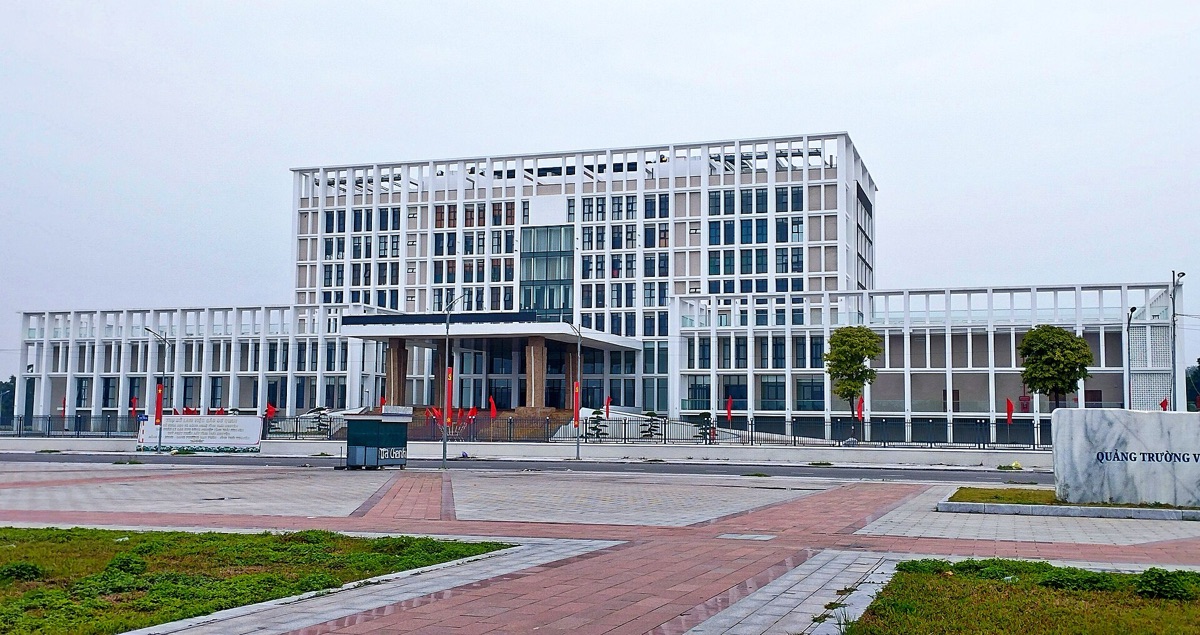
A legal consultant reviews a stack of documents in a modern office in Ho Chi Minh City, preparing a filing for a new factory. The paperwork represents the bridge between foreign capital and local reality.
Navigating the move to a new country requires a clear, methodical approach to ensure long-term success. Companies typically follow a strategic roadmap to establish their presence.
- Site Selection and Infrastructure Audit: Identify regions with the necessary power, water, and logistics-ready zones.
- Regulatory and Legal Alignment: Work with local partners to ensure compliance with trade laws and investment incentives.
- Supply Chain Integration: Establish local vendor networks to complement imported components.
This process is not without its challenges. The transition period can be complex, and the strategic advantages might not apply to companies looking for purely consumer-facing, low-volume retail-only models.
When I first visited the industrial zones outside Hanoi, the sheer speed of construction was dizzy0-one; one week there was a dirt lot, and the next, a massive warehouse foundation was being poured. It felt like watching the future being built in real-time.
What are the Long-term Implications for Global Trade?
A sunset view over the skyline of Hanoi shows the city's rapid expansion, with cranes dotting the horizon. The skyline is a visual testament to the economic momentum of the region.
The long-term implication is a more distributed and resilient global economy. The shift toward Southeast Asia represents a permanent change in how goods are produced and moved.
As more companies follow the lead of the early movers, the infrastructure and talent pool will only grow. This creates a cycle of continuous improvement and further investment.
The move toward Vietnam is not a temporary trend but a strategic realignment of the global industrial map.
Related






Comments 0