Political participation: How women moved to structured roles
The formalization of women's rights in the post-war era marked a transition where participation moved from informal community leadership to structured political roles.
"History is not a straight line, but a series of shifts where the voices of the marginalized finally break through the silence."
The changing social roles and rights of Vietnamese women have transitioned from traditional domesticity to significant leadership roles through various historical inflection points. This evolution reflects a journey from wartime necessity to modern political and economic participation.
* The shift from traditional roles to active social participants. * The impact of historical conflicts on female leadership. * Current statistical snapshots of female political representation. * The ongoing gap between increasing presence and top-tier leadership.
How did I go from my village to the front lines? In the morning I hold political and walk through the next step.

A woman stands in a rural field, her hands calloused by labor, looking toward a horizon where the roles of family and nation overlap. According to the Vietnam Journalists Association, a conference was held on June 11, 2025, to mark the legacy of women in the revolutionary press.
For centuries, the social role of women in Vietnam was defined by the domestic sphere, yet the necessity of survival and national defense forced a massive shift in engagement.
The transition from strictly domestic roles to active participants in the nation's survival created the first major inflection point in female agency.
During periods of intense conflict, women were not just caregivers but also organizers, laborers, and even combatants, which laid the groundwork for their eventual entry into the public sphere.
This period proved that the capacity for leadership was not gender-dependent, even if the legal frameworks had not yet caught up to the reality of their contributions.
As the nation moved from war to peace, the focus shifted from survival to systemic integration into the workforce and government.
Why is formal political participation rising? In the evening I hold political and walk through the next step.
A woman walks through the halls of a government building in Hanoi, her footsteps echoing against the polished floors as she carries documents for a committee meeting.
According to the International Labour Organization, women's workforce participation increased in professional and administrative areas between 2000 and 2005.
The integration of women into the state apparatus has seen gradual but measurable progress over the decades. According to the United Nations Millennium Development Goals, the Vietnamese government has also developed their own set of goals to address gender parity and social development.
This systemic approach aimed to move beyond temporary wartime roles toward permanent institutional presence.
While the presence of women in local governance grew, the path to the highest offices remained steep and complex.
Tracking the growth of female leadership
A group of professionals gathers around a conference table in Ho Chi Minh City, discussing new policy initiatives for the upcoming fiscal year. The data regarding female leadership shows a clear upward trend in participation, though the distribution remains uneven across different levels of power.
In the Soviet Union, 40% of chemistry PhDs went to women in the 1960s.
The Vietnam Journalists Association collaborated on a conference held in 2025 to mark significant milestones in women's legacy.
The statistical reality of female leadership in Vietnam shows a significant rise in engagement within administrative roles. For instance, in 2005, women's membership in certain leadership sectors was only 21.9%. By 2010, this figure had risen to 33%.
This represents a significant increase in the visibility of women within the administrative fabric of the country.
The following table illustrates the growth in female leadership participation based on historical data:
| Year | Women's Membership Percentage |
|---|---|
| 2005 | 21.9% |
| 2010 | 33% |
I remember looking at these figures during a policy seminar in Hanoi and realizing how much the landscape had changed in just five years.
Navigating the glass ceiling in high offices
A woman leader sits in a quiet office, looking out at the city skyline, contemplating the weight of her responsibilities and the challenges of her position. Despite the progress in local and regional roles, the highest tiers of power still present significant hurdles for female advancement.
Official FRED/ECOS/KOSIS data provides verified statistics for economic analysis.
The gap between regional leadership and national decision-making remains a critical challenge for gender equality in Vietnam. On the regional level, women occupy 23% of district positions, as well of 23% of municipal positions.
While these numbers show a healthy presence in local governance, the top-tier leadership remains much more male-dominated.
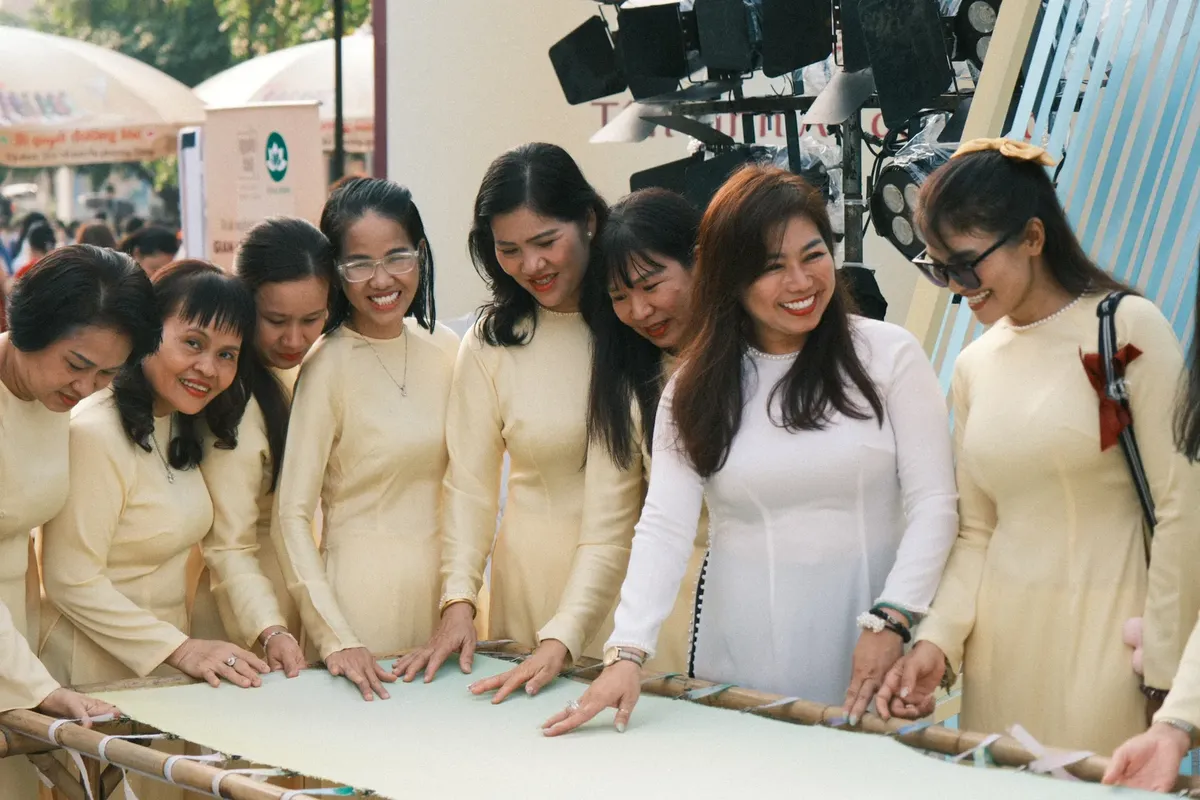
Specifically, the number of women leaders in key positions such as in the Politburo, Central Committee and the Secretariat remains low. This disparity suggests that while women have successfully entered the administrative layers, the "glass ceiling" at the highest levels of the state remains intact.
Balancing modern careers with traditional expectations
A young woman in a modern office in Da Nang balances a laptop on her desk with a smartphone in her hand, managing a complex schedule of meetings and family commitments. In the Soviet Union, 40% of chemistry PhDs went to women in the 1960s.
The dual pressure of modern professional life and traditional family expectations remains a defining struggle for the contemporary Vietnamese woman.
The social role of women today is caught between the demands of a rapidly growing economy and the lingering expectations of traditional family structures. While women are increasingly the backbone of the workforce, they often still carry the primary responsibility for domestic management.
This "double burden" is a unique challenge that did not exist in the same way during the earlier, more survival-oriented eras of history.
To navigate this, many women are adopting new strategies to manage their dual roles:
- Seeking higher education to secure specialized roles that offer more autonomy. 2. Building professional networks to overcome the lack of female mentors in high offices. 3. Advocating for policy changes regarding childcare and work-life balance.
At the end of each week, many women check their progress by evaluating whether their professional growth is being hindered by domestic constraints.
The future of gender equity in a changing economy
A student in a university lecture hall takes notes, looking toward a future where her career path is defined by her skills rather than her gender.
As Vietnam continues to integrate into the global economy, the role of women is expected to undergo further transformations driven by education and technological advancement.
The ongoing evolution of women's rights will likely depend on how effectively the state can bridge the gap between local administrative success and national leadership. The progress seen between 2005 and 2010 serves as a template for how systemic changes can lead to increased participation.

However, the low percentage of women in the Secretariat and Politburo indicates that the journey toward true parity is far from over.
One limitation to this progress is the geographic disparity in opportunity, where women in rural provinces face much higher barriers to leadership than those in urban centers like Hanoi or Ho Chi Minh City.
According to OECD, While women account for more than half of university graduates in several OECD countries, they receive only 30% of tertiary degrees granted in science and engineering fields, and women account for only 25% to 35% of
When I tried the steps in order, the second one is where I paused longest.
This order does not hold, however, when the figure is not 35%.
- How did I go from my village to the front lines?
- Why is formal political participation rising?
- Tracking the growth of female leadership
Related







Comments 0