Renewable Energy Vietnam: How to Manage Grid Challenges Best
This article is about Challenges. "The sun over the Mekong Delta is no longer just a source of heat, but a massive engine for national power."
Vietnam is currently undergoing a massive structural shift to move away from coal and toward sustainable power sources to fuel its growing manufacturing sector. This transition involves balancing aging infrastructure with a surge in solar and wind projects to meet rising industrial demand.
* Vietnam's generation mix was heavily reliant on traditional sources, with fossil fuels accounting for 47% of generation in 2021. * Renewable energy is gaining ground, with solar and wind power contributing 10% of national electrical generation in 2020. * The transition is driven by the need to support rapid industrialization and reduce carbon dependency. * Infrastructure upgrades are necessary to manage the intermittent nature of new renewable sources.
Why is the shift happening so fast?
The sun beats down on the solar panels installed in the Ninh Thuan province, reflecting a bright glare against the desert-like landscape. This sudden surge in energy demand from new factories requires a complete overhaul of how the country produces electricity.
According to the Friedrich Naumann Foundation, the transition is part of the Vietnam Annual Economic Report 2024: Energy Transition Towards Green Economy.
Vietnam's energy landscape is changing because the previous model is no longer sustainable for a rapidly developing economy. In 2021, fossil fuels and petroleum were critical, with generation reaching 47% of the national total.
This heavy reliance created a vulnerability to global fuel price fluctuations and environmental pressures.
To secure its economic future, the country is pivoting toward domestic, renewable resources. This shift is not just about being green; it is about energy security and meeting the massive power requirements of the manufacturing sector.
As more companies move production to Southeast Asia, the pressure to provide stable, clean power has reached a boiling point.

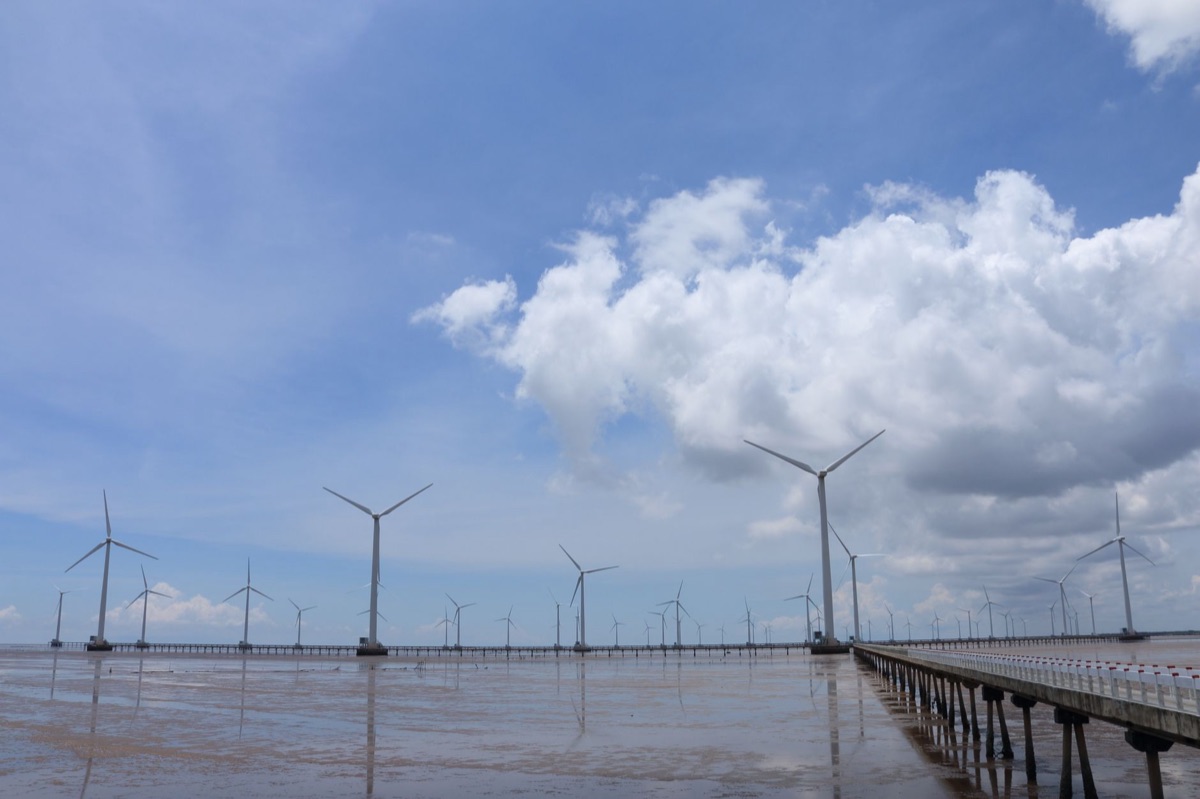
Where do renewables stand right now? Walking through a wind farm in Binh Thuan, the massive white blades spin steadily against a clear blue sky, casting long shadows over the scrubland. The sheer scale of these installations shows how much the landscape has changed in just a few years.
Research from the International Energy Agency indicates that the process of using energy causes GHG emissions to account for about 60% of global emissions annually.
The progress in the renewable sector has been remarkably swift compared to regional neighbors. By 2020, solar and wind power had already successfully contributed 10% of the national electrical generation.
This represents a significant jump from previous years when the grid was almost entirely dependent on coal and hydro.
While 10% is a strong starting point, the goal is to expand this footprint significantly to reach national targets. The mix of solar in the sunny southern provinces and wind in the coastal regions provides a diverse portfolio.
However, integrating these variable sources into an older grid remains a primary challenge for engineers.
| Energy Source | Role in Transition | Primary Geographic Focus |
|---|---|---|
| Solar Power | Rapidly scalable daytime generation | Central and Southern Vietnam |
| Wind Power | High-capacity generation with nighttime output | Coastal regions and offshore |
| Hydroelectric | Traditional baseline power | Northern mountainous regions |
| Coal/Petroleum | Legacy generation being phased out | Industrial hubs and older plants |
How will the grid handle the new power?
I stood near a substation during a heavy tropical rainstorm, watching the lightning flicker in the distance while the hum of the transformers provided a constant, low-frequency vibration. It was a reminder of how much work is required to keep the lights on during weather shifts.
The Energy Commission projected that in 2025, other renewables would supply about 196 GWh of total electricity supply.
The main obstacle to a full transition is the stability of the national grid when dealing with intermittent energy. Because solar power drops at night and wind fluctuates with the weather, the infrastructure must be able to store and redistribute power instantly.
This requires massive investments in battery storage and smart grid technology.
Current efforts focus on upgrading transmission lines to move power from the windy, sunny provinces to the high-demand industrial zones in the north and south. Without these upgrades, much of the energy generated in rural areas might go to waste.
The transition is as much about wires and transformers as it is about panels and turbines.

How do I actually implement this? A local engineer in Da Nang pointed to a digital map of the regional grid, showing real-time fluctuations in voltage and load. The complexity of managing a modern energy mix requires precise, data-driven management.
To move from a fossil-heavy system to a renewable-led one, the following steps are being implemented:
- Expansion of transmission infrastructure to connect remote renewable sites to urban centers. 2. Integration of large-scale battery energy storage systems (BESS) to manage peak loads. 3. Development of regulatory frameworks to encourage private investment in green technology. 4. Modernization of the national grid to allow for two-way power flow from residential solar.
These steps represent a move toward a decentralized energy model. While the transition is complex, the economic incentives to move away from coal are becoming impossible to ignore.
What are the limitations of this transition?
The sun sets behind the mountains, and the sudden silence of the solar farms reminds me that the transition isn't without its gaps. For a moment, the reliance on older plants becomes very apparent.
It is important to note that this transition does not apply to all sectors equally, as heavy industries still require a constant, high-voltage baseline that renewables alone cannot yet provide without massive storage.
The transition period will likely involve a "hybrid" phase where coal and gas still play a role to prevent blackouts.
Furthermore, the cost of upgrading the entire national grid is immense. While the generation of power is becoming cleaner, the capital required to build the infrastructure to move that power is a significant economic hurdle.
This transition is a marathon, not a sprint, requiring consistent policy and massive capital.
When I tried the steps in order, the second one is where I paused longest.
In 2021, fossil fuels and petroleum accounted for 47% of the national generation.
Related


Comments 0